

+86 185 4892 6888

Jul. 22, 2026
For contractors, distributors, and industrial buyers, the quality of malleable iron fittings directly affects pipeline safety, sealing performance, and long-term reliability. Poor-quality fittings may cause problems such as leakage, thread failure, corrosion, or premature system breakdown.
A professional quality control (QC) process should verify that malleable iron fittings meet recognized manufacturing standards, including ASTM A197 for malleable iron castings and ASME B16.3 for threaded malleable iron fittings.
A complete inspection process should cover:
For fire protection systems, gas pipelines, plumbing networks, and industrial applications, strict quality inspection helps ensure safe and leak-free connections.
HuLu manufactures malleable iron pipe fittings with quality control procedures designed for global distributors, contractors, and engineering projects.
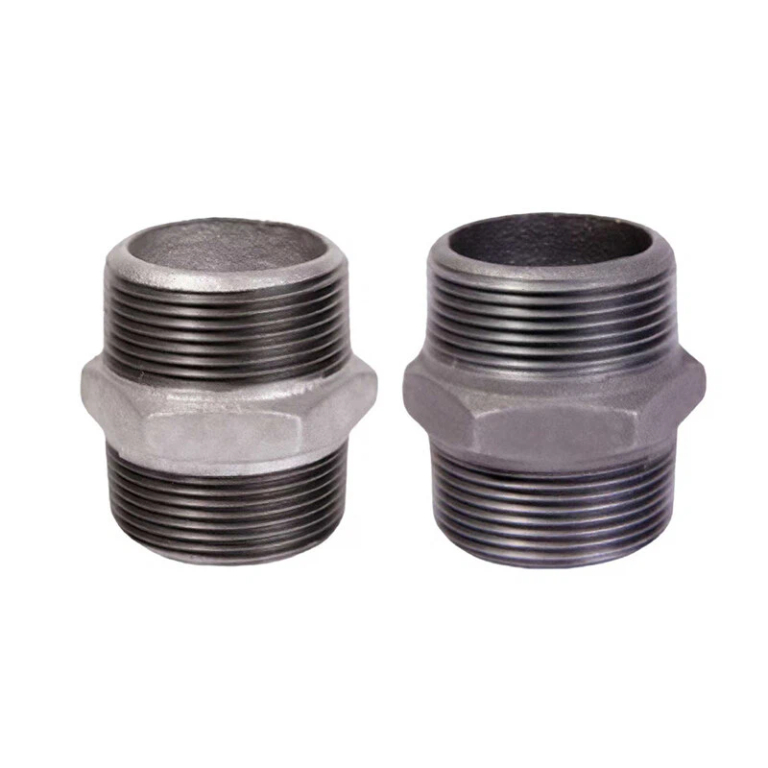
Malleable iron fittings are widely used because they provide strong threaded connections, good mechanical performance, and reliable durability.
However, fitting quality depends on:
In applications such as fire sprinkler systems and gas pipelines, even small manufacturing defects can create serious risks.
A proper QC system helps ensure:
Before purchasing, buyers should confirm that fittings comply with applicable standards.
Common standards include:
ASTM A197 defines requirements for malleable iron castings, including:
ASME B16.3 specifies requirements for threaded malleable iron fittings, including:
For fire protection and industrial projects, compliance with recognized standards provides additional confidence in product reliability.
Material verification is the first step in quality control.
Buyers should request and review:
MTR documents help confirm that the fittings meet ASTM A197 requirements for malleable iron.
Important material factors include:
Qualified malleable iron fittings should include permanent identification markings.
Check for:
Traceability allows manufacturers and buyers to track production information if quality issues occur.
Sample testing should confirm that fittings meet required mechanical performance.
Important properties include:
ASTM A197 malleable iron typically requires minimum mechanical properties, including approximately:
Proper mechanical properties ensure the fitting can withstand installation stress and operating conditions.
Visual inspection helps identify casting and finishing problems before installation.
Inspect fittings for:
Defects may reduce pressure resistance and create potential leakage paths.
For galvanized malleable iron fittings, check:
Avoid products with:
A consistent zinc layer improves corrosion resistance and service life.
For black malleable iron fittings, verify:
The protective coating should help prevent corrosion during storage and transportation.
Accurate dimensions are essential for proper installation.
Incorrect dimensions may cause:
Random wall thickness checks should confirm compliance with:
Common pressure ratings include:
Adequate wall thickness ensures mechanical strength under pressure.
Inspect:
Special attention should be given to:
Deformation can affect sealing performance and installation accuracy.
Measure:
Measurements should match production drawings and applicable standards.
Thread accuracy is one of the most important factors affecting leak prevention.
Poor threads can cause:
Use professional gauges to verify:
Common thread standards include:
Thread gauges help ensure compatibility with standard pipe systems.
Quality threads should be:
Damaged threads may prevent proper sealing.
Proper thread engagement is necessary for leak-free installation.
Inspect whether:
Generally, several complete thread engagements are required for reliable performance.
Beyond visual and dimensional checks, functional testing verifies real operating performance.
Random samples should undergo:
Testing verifies:
A typical test pressure may reach approximately:
For fire protection applications, pressure testing is especially important because fittings must maintain reliable performance during emergency operation.
Malleable iron obtains its properties through heat treatment.
Testing may include:
These tests confirm that the material can:
Different applications require different quality priorities.
| Application | Key QC Focus | Recommended Inspection Priority |
|---|---|---|
| Fire Protection Systems | Pressure reliability | Thread accuracy, pressure testing |
| Gas Pipelines | Leak prevention | Material certification, thread inspection |
| Commercial Plumbing | Installation efficiency | Dimensions and coating quality |
| Industrial Piping | Long-term durability | Mechanical properties and pressure tests |
| Distributor Inventory | Consistent supply | Batch traceability and appearance inspection |
For contractors working on fire protection systems, additional attention should be given to:
✔ Confirm ASTM A197 compliance
✔ Verify ASME B16.3 requirements
✔ Review supplier quality documents
✔ Check production capability
✔ Inspect fitting markings
✔ Check thread condition
✔ Verify coating quality
✔ Confirm dimensions
✔ Avoid damaged threads
✔ Use correct sealing materials
✔ Confirm proper tightening
✔ Perform system pressure testing
Reliable fitting selection reduces risks during project operation.
Possible issues:
Solution:
Choose suppliers with controlled casting processes and inspection procedures.
Possible issues:
Solution:
Verify thread gauges and machining accuracy.
Possible issues:
Solution:
Check galvanized or protective coating consistency.
HuLu provides professional malleable iron fitting solutions for global customers.
Our advantages include:
HuLu supports:
By combining reliable production processes with strict quality management, HuLu helps customers achieve safe and durable piping systems.
Contractors and distributors often evaluate malleable iron fittings based on consistency and installation reliability.
Common feedback includes:
"The thread quality was consistent, making installation faster and reducing leakage problems."
"The galvanized coating remained uniform during transportation and storage."
"Quality inspection documents helped us confidently supply fittings for engineering projects."
These experiences show that manufacturing quality control plays a key role in successful piping applications.
A reliable malleable iron fittings quality control checklist should cover every stage from raw material verification to final performance testing.
Key inspection points include:
For contractors, distributors, and industrial buyers, selecting fittings from a manufacturer with strict QC procedures helps ensure safer installations, fewer maintenance issues, and long-term system reliability.
Contact HuLu for high-quality malleable iron pipe fitting solutions.
Email: hulu@hulucasting.com
h18548926888@qq.com
Latest News
Sep. 28, 2026
How to Specify Industrial Valves for Fire Protection, Water Treatment, and HVAC Applications
Sep. 28, 2026
How to Define Technical Drawings and Specifications When Ordering OEM Cast Iron Fittings
Sep. 24, 2026
When to Use Threaded Pipe Fittings vs Grooved Systems Based on Pipe Diameter and Application
Sep. 24, 2026
How Grooved Pipe Fittings Reduce Installation Time in Large-Scale HVAC and Industrial Projects
Hot Products