






Fire protection is not a category where you can afford to be wrong about a fitting. When a sprinkler system activates in a burning building — often after years or decades of standby — every grooved coupling, every elbow, every tee must perform exactly as specified. A failed gasket at a single coupling means water pressure loss across an entire zone. A cracked malleable iron fitting at a fire pump discharge brings the system down at the worst possible moment. For fire protection engineers, MEP contractors, and procurement professionals specifying and sourcing pipe system components, the quality of every fitting is a life-safety decision — not just a budget line item. This is why HuLu, with 30 years of foundry expertise since 1995, has supplied grooved pipe fittings to landmark projects including the Hong Kong-Zhuhai-Macao Bridge, Beijing Daxing Airport, and Suzhou Central Plaza — where fire protection performance is non-negotiable.
This guide provides a comprehensive technical overview of grooved pipe fittings for fire protection systems in 2026 — covering fitting types, rigid vs flexible couplings, material standards, installation advantages over threaded and welded connections, certification requirements, and how to source from a manufacturer with three decades of foundry experience and an 8,000+ product portfolio.
1. How Grooved Couplings Became the Fire Protection Standard
1.1 A Brief History of the Mechanical Joint
Before grooved couplings, fire protection piping was assembled with threaded joints or welded connections. Both methods had inherent limitations: threading weakened the pipe wall at each joint (reducing pressure rating), required skilled labor, and was impractically slow on large-diameter pipe. Welding required hot work permits — a significant obstacle in occupied buildings and renovation projects — and made future system modifications difficult. The grooved mechanical coupling, introduced commercially in the 1920s but not widely adopted until the 1960s-70s, solved all three problems: no pipe wall reduction, no hot work, and the ability to disassemble and reconfigure any section without cutting pipe.
1.2 The Four Components of a Grooved Joint
A grooved pipe connection consists of four elements, each playing a specific role in joint integrity:
-
The grooved pipe end — a circumferential groove rolled or cut into the pipe end, creating a shoulder that the coupling housing engages
-
The gasket — a synthetic rubber sealing element (typically EPDM for fire protection water service) that is compressed between the coupling housing and the pipe surface, forming the pressure-tight seal
-
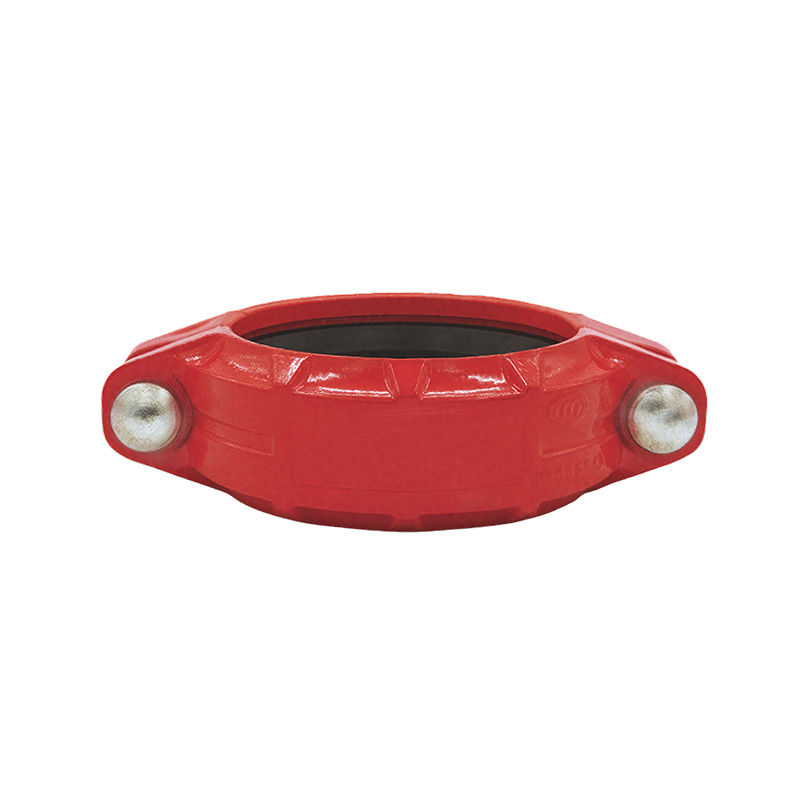
The coupling housing — a two-piece ductile iron casting that wraps around the pipe ends, engaging the grooves and containing the gasket
-
The bolts and nuts — track-head bolts that draw the housing halves together, compressing the gasket and locking the joint
The mechanical simplicity of this design — no threading, no welding, no adhesives — is the source of its reliability. A properly assembled grooved joint is visually inspectable: the installer and inspector can confirm that the housing is seated in the groove, that the gasket is not pinched, and that the bolt pads are in metal-to-metal contact. A threaded joint offers no such visual confirmation of internal thread engagement. A welded joint requires NDT (non-destructive testing) to verify integrity.
HuLu manufactures grooved pipe fittings from a foundry that has been in continuous operation since 1995. The company's 200-strong pre-sales and after-sales team, 1,000 total employees, and 8,000+ product portfolio support projects from standard commercial fire protection to the specialized requirements of mega-infrastructure — including the Hong Kong-Zhuhai-Macao Bridge, the world's longest sea-crossing bridge-tunnel system, and Beijing Daxing Airport, one of the world's largest air terminals. These projects impose verification, documentation, and quality consistency requirements that go far beyond standard commercial procurement.
2. Complete Grooved Fitting Types for Fire Protection Systems
| Fitting Type | Function | Typical Fire Protection Location |
|---|---|---|
| Rigid Coupling | Fixed pipe joint — no movement allowed | Risers, equipment connections, valve stations, branch line take-offs |
| Flexible Coupling | Allows angular deflection (1-3°) and axial movement | Long straight runs, building expansion joints, seismic zones, areas with thermal cycling |
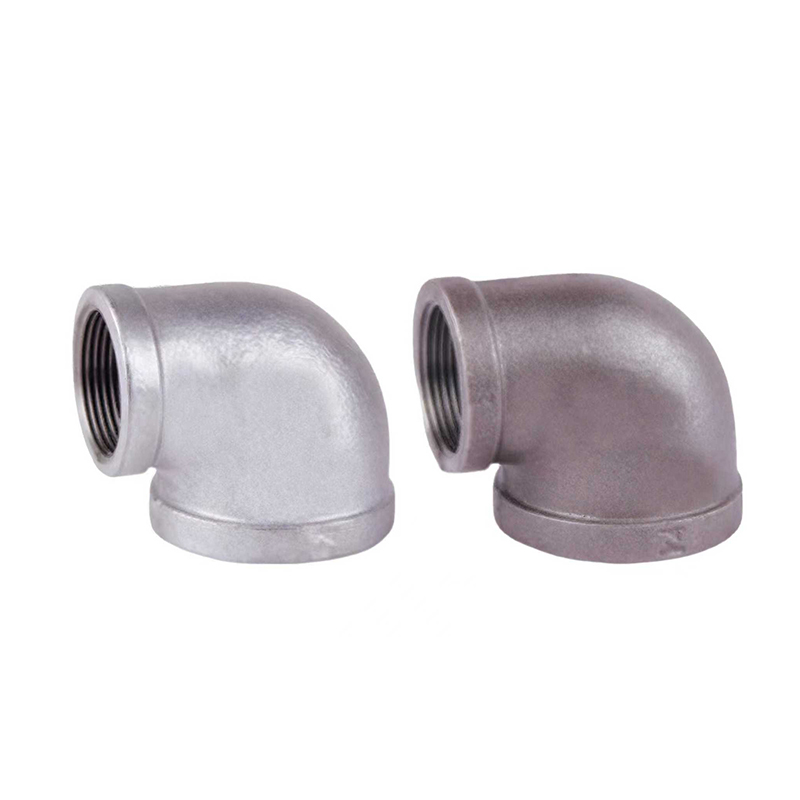
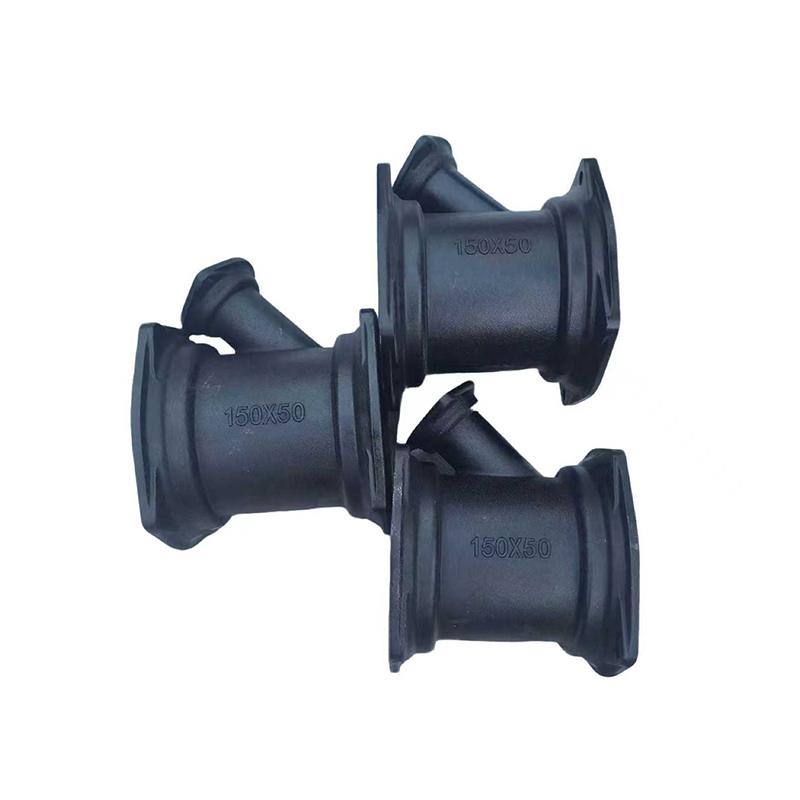
| 90° Grooved Elbow | Changes pipe direction by 90 degrees | Riser-to-main transitions, pump room piping, tight-space routing |
| 45° Grooved Elbow | Changes pipe direction by 45 degrees | Offset connections, gradual directional changes to reduce friction loss |
| Equal Tee | Three-way connection — all outlets same size | Branch line connections, sprinkler zone distribution |
| Reducing Tee | Three-way connection — branch outlet smaller than run | Main-to-branch line transitions |
| Concentric Reducer | Transitions between two pipe sizes — centerlines aligned | Pump discharge to smaller riser, vertical transitions |
| Eccentric Reducer | Transitions between pipe sizes — one side flat | Horizontal suction piping to prevent air pockets at pump inlet |
| Grooved Flange | Connects grooved pipe to flanged equipment | Pump connections, check valve mounting, tank connections |
| Mechanical Tee | Branch take-off — hole cut in pipe, fitting bolted on | Sprinkler head branch lines, adding connections to existing mains |
3. Rigid vs Flexible Couplings: When to Use Each
| Characteristic | Rigid Coupling | Flexible Coupling |
|---|---|---|
| Joint Movement | None — pipe is locked in position | 1-3° angular deflection per coupling |
| Axial Movement | None | Limited — accommodates thermal expansion |
| Seismic Performance | Requires separate expansion joints or flexible couplings in seismic zones | Absorbs seismic displacement — essential in earthquake-prone regions |
| Installation Alignment | Requires precise pipe alignment | Forgiving — accommodates minor misalignment |
| Pipe Support Requirements | Standard hanger spacing per NFPA 13 | Additional sway bracing may be required depending on deflection angle |
| Typical Use | Risers, valve stations, equipment connections, pump rooms | Long straight runs, building expansion joints, across seismic gaps, thermal compensation |
| Pressure Rating | Same as flexible — determined by coupling design and pipe schedule | Same as rigid |
The standard fire protection system uses both types. A typical high-rise sprinkler system: flexible couplings at the building expansion joints and on long horizontal runs between the riser and the farthest sprinkler zone, rigid couplings at the riser itself, at the fire pump discharge, and at all valve and equipment connections. HuLu manufactures both rigid and flexible couplings in the full range of sizes with interchangeable gasket types for different service conditions.
4. Grooved vs Threaded vs Welded: The Practical Comparison
| Factor | Grooved | Threaded | Welded |
|---|---|---|---|
| Installation Speed | Fastest — 3-5x faster than threading | Slow — each joint must be cut, threaded, doped, and tightened | Slowest — weld, cool, inspect, repeat |
| Hot Work Required | No — purely mechanical assembly | No | Yes — fire watch, hot work permit needed |
| Pipe Wall Reduction | None — groove is formed, not cut | Significant — thread depth removes material, reduces pressure rating | None |
| System Modification | Easy — disassemble and reconfigure | Difficult — must unthread entire section | Very difficult — must cut and re-weld |
| Seismic/Thermal Accommodation | Built-in with flexible couplings | None — requires expansion joints | None — pipe will buckle or crack |
| Noise/Vibration Isolation | Gasket dampens vibration transmission | Minimal — metal-to-metal contact | Minimal — rigid continuous metal |
| Visual Inspection | Verifiable — coupling engagement is visible | Not possible — thread engagement hidden inside joint | Requires NDT (x-ray, ultrasonic) |
| Skill Level | Moderate — faster training | High — skilled pipefitter required | Very high — certified welder required |
5. Material Standards and Certifications for Fire Protection Fittings
| Standard | Scope | What It Ensures |
|---|---|---|
| NFPA 13 | Installation of sprinkler systems | System design, component selection, installation practices |
| UL Listed | Underwriters Laboratories product certification | Independent testing and ongoing factory surveillance — required by most AHJs |
| FM Approved | Factory Mutual product certification | Performance testing for property loss prevention — required by many insurers |
| ASTM A536 | Ductile iron castings | Material grade (65-45-12 typical for couplings), tensile strength, elongation |
| ASTM A47 | Malleable iron castings | Material specification for threaded fittings, tensile and yield strength |
| AWWA C606 | Grooved and shouldered joints | Design, dimensions, testing of grooved-end fittings for water service |
| ISO 9001 | Quality management | Process consistency, documentation, continuous improvement |
6. HuLu: 30 Years of Foundry Excellence in Pipe System Components
HuLu has specialized in the foundry sector since 1995 — over three decades of continuous manufacturing experience. Beginning with in-house mold development, the company established an integrated R&D-Production-Sales system specializing in cast iron pipe fittings and valves. Today, HuLu employs approximately 1,000 skilled personnel, including a dedicated 200-strong pre-sales and after-sales team, and maintains an 8,000+ product portfolio spanning grooved pipe fittings, malleable iron fittings, valves, ductile iron pipes and fittings, steel pipes, standard components, and metal forming dies.
Why fire protection professionals and MEP contractors choose HuLu:
-
Thirty years of foundry expertise since 1995 — metal quality, casting consistency, and process stability that only decades of production experience can deliver
-
Landmark project credentials — Hong Kong-Zhuhai-Macao Bridge, Beijing Daxing Airport, Suzhou Central Plaza — fire protection systems for mega-infrastructure where failure is not an option
-
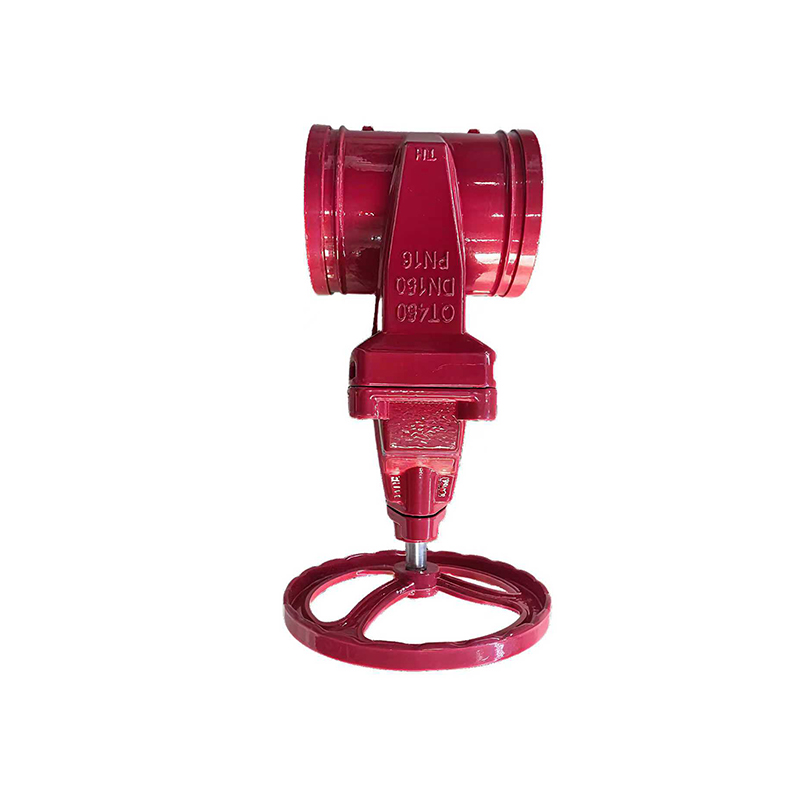
8,000+ product portfolio — grooved couplings, elbows, tees, reducers, flanges, mechanical tees, and the valves they connect to — one supplier for the entire fire protection piping system
-
End-to-end quality control — from raw material through casting, machining, coating, and inspection — integrated manufacturing eliminates supplier-to-supplier quality gaps
-
200-strong service team — pre-sales technical support for specification and submittal preparation, post-sales support for installation and commissioning
-
80%+ reorder rate — the strongest possible evidence of consistent quality and reliable delivery
-
Custom OEM and private label — branded packaging, custom formulations, and startup-friendly order quantities for distributors building their own product lines
Source Grooved Fittings for Your Fire Protection Project
Contact HuLu with your project specifications — pipe sizes, pressure rating, fitting types, and required certifications. Our 200-strong service team provides technical submittal support, compliance documentation, and a complete quotation.
Email hulu@hulucasting.comCC: h18548926888@qq.com | Since 1995 | 8,000+ SKUs | Hong Kong-Zhuhai-Macao Bridge · Beijing Daxing Airport
7. Frequently Asked Questions
Conclusion
Grooved pipe fittings are not a commodity — they are engineered components whose quality directly affects the reliability of fire protection systems that must function flawlessly after years or decades of standby. The pipe fitting decisions made at the specification and procurement stage — coupling type, gasket material, manufacturer quality systems, certification status — determine whether a sprinkler system delivers water to the fire or loses pressure through failed joints.
HuLu's 30-year foundry heritage, 1,000-person team, 8,000-product portfolio, landmark project credentials (Hong Kong-Zhuhai-Macao Bridge, Beijing Daxing Airport), and the operational evidence of an 80%+ reorder rate from satisfied clients provide the manufacturing foundation that fire protection projects — from standard commercial buildings to critical infrastructure — require. For MEP engineers specifying grooved systems, procurement professionals sourcing fire protection components, and distributors building product lines, HuLu offers the combination of technical capability, production scale, and quality consistency that three decades of continuous manufacturing experience creates.
Specify Grooved Fittings for Your Next Project
Contact HuLu with your pipe sizes, fitting types, pressure rating, and certification requirements. Our team provides submittal documentation, compliance certificates, and a complete quotation.
Email hulu@hulucasting.comCC: h18548926888@qq.com | HuLu | Since 1995 | Grooved Fittings · Valves · Pipes · Ductile Iron