

+86 185 4892 6888

Metal Forming Dies
Grooved Pipe Fittings
Malleable Iron Pipe Fittings
Valve
Standard Component&Part
Ductile Iron Pipes and Fittings
Steel Pipe
Metal Forming Dies
I. Core Definition and Essential Function
A mold is a tool that shapes raw materials (metal, plastic, rubber, etc.) into products with fixed dimensions and shapes through a specific structural form. Its core function is to achieve standardized, mass-produced, and high-precision manufacturing; it is the "mother machine" of the manufacturing industry. Essentially, it is the intermediate carrier that transforms design drawings into physical products. External forces (pressure, temperature, injection molding, etc.) cause physical/chemical changes in the raw materials, ultimately replicating a product identical to the mold cavity. Molds are widely used in the automotive, electronics, piping, and home appliance industries.
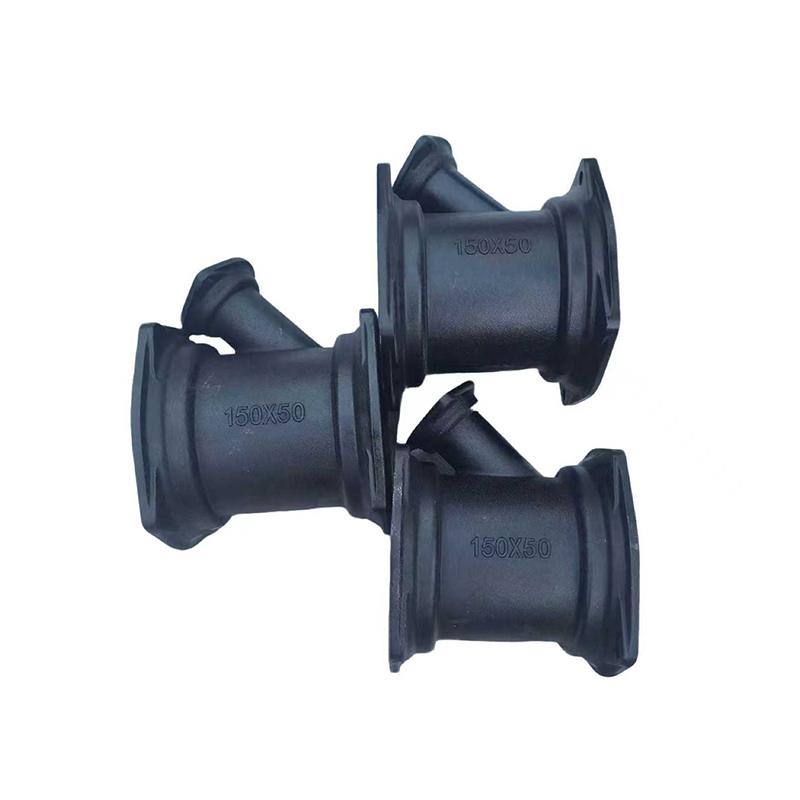
In the piping industry, which you are interested in, molds are key equipment for producing core components such as steel pipe fittings (e.g., internally threaded pipe joints, malleable pipe fittings) and plastic pipes. Examples include sand molds for ductile iron pipe fittings and forging molds for galvanized steel pipe fittings, which directly determine the dimensional accuracy and appearance quality of the product.
II. Core Classification (Based on Molding Materials and Processes, Related to Pipeline Industry Applications)
Based on differences in raw material types and molding processes, molds can be divided into several categories. The types most relevant to pipeline and fitting production are as follows:
1. Metal Molding Molds (Core Molds for Pipeline Fittings)
These are core mold types for steel pipe fitting manufacturing, used for metal raw materials (carbon steel, ductile iron, stainless steel, etc.) through pressure processing or casting processes.
Casting Molds:
Core Process: Molten metal (such as ductile iron liquid) is injected into the mold cavity, and after cooling, a casting is obtained.
Pipeline Industry Applications: Sand molds (resin sand molds, lost foam molds) for producing ductile iron pipe fittings (elbows, tees) must meet the requirement of "cavity smoothness ≥ Ra6.3μm" to ensure the smoothness of the pipe fitting's inner wall and comply with the dimensional tolerance requirements of GB/T 13295 standard.
Representative Types: Sand molds, metal molds, suitable for mass production of large-diameter pipe fittings from DN80 to DN2600.
Forging Dies:
Core Process: Applying high pressure to heated metal billets, causing them to plastically deform within the die cavity;
Pipeline Industry Application: Forging dies for producing malleable pipe fittings (such as internally threaded pipe joints), using a two-step process of "pre-forging die + final forging die" to ensure the precision of the pipe thread (compliant with GB/T 7306 pipe thread standard), with a tensile strength ≥375MPa; Die Types: Hot forging dies, cold forging dies, suitable for the production of small-diameter, high-precision pipe fittings from DN15 to DN100.
Stamping Dies:
Core Process: Applying pressure to metal sheets (such as steel plates) using a punch press to achieve shearing, bending, and forming;
Pipeline Industry Application: Stamping dies for manufacturing steel pipe flanges, enabling mass production of "flange blanks," requiring only subsequent machining of bolt holes, suitable for the rapid manufacturing of DN50-DN600 flanges.
2. Plastic Molding Dies (Molds for Plastic Pipes)
For plastic raw materials (PVC, PE, PPR, etc.), used to produce plastic pipes and fittings (such as PVC water pipes, PE gas pipe fittings):
Extrusion Dies:
Core Process: Plastic granules are heated and melted, then continuously extruded into the die cavity through an extruder, and after cooling, form long strip-shaped products;
Pipe Industry Application: Extrusion dies for producing PVC-U drainage pipes require controlling the "die temperature ±5℃" to ensure uniform pipe wall thickness (deviation ≤10%), conforming to GB/T 5836.1 standard;
Advantages: Continuous production is possible, suitable for mass production of DN16-DN630 plastic pipes.
Injection Mold:
Core Process: Molten plastic is injected under high pressure into a closed mold cavity. After cooling, the mold is opened and the product is removed.
Pipe Industry Application: Injection molds for producing plastic pipe fittings (such as PE tees and PPR elbows) require a draft angle of 1°-3° to prevent the product from sticking to the mold and to ensure the flatness of the pipe fitting's sealing surface is ≤0.1mm/m.
III. Core Manufacturing Processes and Quality Requirements
The manufacturing precision of the mold directly determines the product quality. It requires four core stages: design, machining, heat treatment, and inspection, especially meeting strict dimensional tolerance and surface quality requirements:
Design Stage: Based on product drawings (such as 3D models of steel pipe fittings), mold structure design is performed using CAD/CAM software (AutoCAD, UG). Process parameters such as "metal shrinkage (1.2%-1.5% shrinkage rate for ductile iron)" and "plastic draft angle" must be considered. For pipe fitting molds, the "running system" (such as the gate location in casting molds) needs to be carefully designed to ensure uniform filling of the cavity by molten metal/plastic, avoiding defects such as "cold shuts" and "shrinkage cavities" in the pipe fittings.
Machining Stage:
Core Equipment: CNC machining center (accuracy ±0.005mm), EDM (Electrical Discharge Machining, cavity surface roughness Ra≤1.6μm), wire EDM machine (suitable for complex cavity machining);
Key Points for the Piping Industry: The "threaded cavity" of forging dies must be machined using "slow wire EDM" to ensure thread profile deviation ≤0.02mm, meeting pipe thread sealing requirements.
Heat Treatment Stage:
Metal dies require "quenching + tempering" treatment. For example, the die steel (H13 steel) for forging dies needs to be heated to 1050℃ for quenching, and after tempering, the hardness reaches HRC45-50 to ensure the die's service life (≥100,000 stamping/forging cycles);
The sand molds for casting dies require "drying treatment (temperature 180℃-220℃, time 2-4h)" to reduce the moisture content of the molding sand (≤0.5%) and prevent porosity in the castings.
Inspection Phase:
* **Dimensional Inspection:** Use a coordinate measuring machine (accuracy ±0.003mm) to inspect the cavity dimensions. For example, the "socket diameter tolerance" of the ductile iron pipe fitting mold must be controlled within ±0.2mm.
* **Surface Inspection:** Inspect the inner wall of the cavity using an endoscope. Defects such as "scratches and burrs" are not allowed, ensuring the surface smoothness of the pipe fitting meets the standards.
Core Advantages and Selection Considerations
1. Core Advantages (Supporting Efficient Production in the Pipeline Industry)
Mass Production Capability: One set of casting molds can produce ≥1000 ductile iron pipe fittings, increasing efficiency by 50 times compared to manual production, meeting the needs of large-scale municipal pipeline network construction;
Precision and Stability: The dimensional tolerance of mold-formed pipe fittings is ≤±0.2mm, far superior to manual processing (±1mm), ensuring the sealing of pipe connections (leakage rate ≤0.01%);
Cost Controllability: After the initial investment in the mold, the cost per unit decreases with production volume. For example, when mass-producing DN200 ductile iron elbows, the mold-allocated cost only accounts for 5%-8% of the total product cost.
2. Selection Considerations (Key to Piping Industry Adaptation)
Product Matching: Select molds based on pipe fitting material. For example, use sand casting molds for ductile iron pipe fittings and hot forging molds for malleable pipe fittings to avoid product scrap due to "material and mold process mismatch."
Standard Compliance: Mold design must comply with piping industry standards. For example, molds for producing fire-fighting pipe fittings must meet the "sealing surface flatness" requirements of GB 5135.11 to avoid affecting the pressure resistance of fire-fighting pipelines.
Lifespan Considerations: For metal molds, prioritize wear-resistant mold steels such as "H13" and "Cr12MoV" to ensure a service life of ≥50,000 cycles, reducing the cost of frequent mold changes. For plastic molds, select corrosion-resistant mold steels such as "P20" and "718H" to prevent corrosion of the mold cavity by high-temperature decomposition products of plastic.

FAQ

What is the technical difference between "black" and "galvanized" fittings?
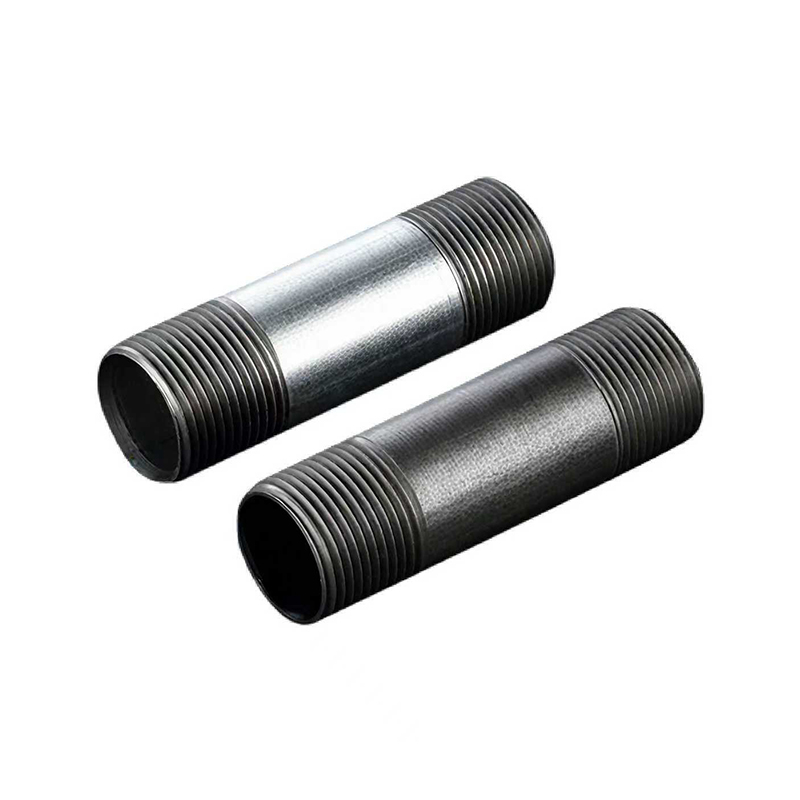
The difference lies in the surface treatment and intended use. Black fittings are coated with a proprietary anti-rust oil. They are primarily used in natural gas pipelines, steam systems, and oil transportation, where the presence of zinc (present in the galvanized coating) can peel off and clog sensitive valves or burners. Galvanized fittings, on the other hand, are hot-dipped in a zinc bath, providing high corrosion resistance for drinking water systems and outdoor environments. From a metallurgical perspective, the iron body is the same; only the protective barriers differ to accommodate chemical compatibility.
What do "UL Listed" and "FM Approved" actually mean for a project?
These certifications are independent safety verifications. UL (Underwriters Laboratories) focuses on the structural integrity and burst pressure of fittings. FM (Factories Mutual) focuses on preventing property damage, ensuring fittings can withstand fire and mechanical impact. For contractors, using UL/FM certified fittings means installations will pass fire chief inspections, and building owners can obtain lower insurance premiums because the risk of catastrophic pipe failure is minimized.
What if the fitting surface discolors?
For black fittings, the surface is coated with anti-rust oil. Some surface oxidation (orange tinge) may occur if stored in a high-humidity environment for an extended period. This is usually superficial and does not affect the structural integrity of "heavy-duty" walls. However, for critical applications, fittings should be wiped clean and re-oiled, or stored in their original double-walled prefabricated packaging until installation.