

+86 185 4892 6888

Metal Forming Dies
Grooved Pipe Fittings
Malleable Iron Pipe Fittings
Valve
Standard Component&Part
Ductile Iron Pipes and Fittings
Steel Pipe
Steel Pipe
I. Core Definition and Material Basis
Steel pipes refer to hollow, long strip-shaped pipes made from carbon steel, stainless steel, alloy steel, and other steel materials through rolling, welding, and forming processes. Their core function is to transport fluids (water, oil, gas, etc.) or serve as structural supports. They are fundamental building materials in industrial, municipal, and construction fields. Their materials must meet three core requirements: strength, corrosion resistance, and pressure resistance. Mainstream materials include:
Carbon steel: Q235B (low-pressure applications, such as civil water supply and drainage), Q355B (medium-pressure applications, such as HVAC pipes), L245/L360 (dedicated for oil and gas transportation, conforming to GB/T 9711 standard);
Stainless steel: 304/316 (corrosion-resistant applications, such as chemical solutions and seawater transportation);
Alloy steel: Cr-Mo alloy steel (high-temperature and high-pressure applications, such as power plant steam pipelines). Material selection must consider the characteristics of the medium (temperature, pressure, corrosiveness) and the operating environment. For example, stainless steel pipes are preferred in the chemical industry, while galvanized carbon steel pipes are preferred for municipal water supply.
II. Core Classification (Based on Manufacturing Process, Covering Key Types You Care About)
Based on differences in forming and welding processes, steel pipes can be divided into two main categories: seamless steel pipes and welded steel pipes. Each category is further subdivided into different subtypes to suit different application scenarios:
1. Seamless Steel Pipe
Core Process: Manufactured through "piercing a solid steel billet → hot rolling/cold drawing," resulting in no weld seams, avoiding the risk of weld leakage, and offering excellent pressure resistance.
Key Subtypes:
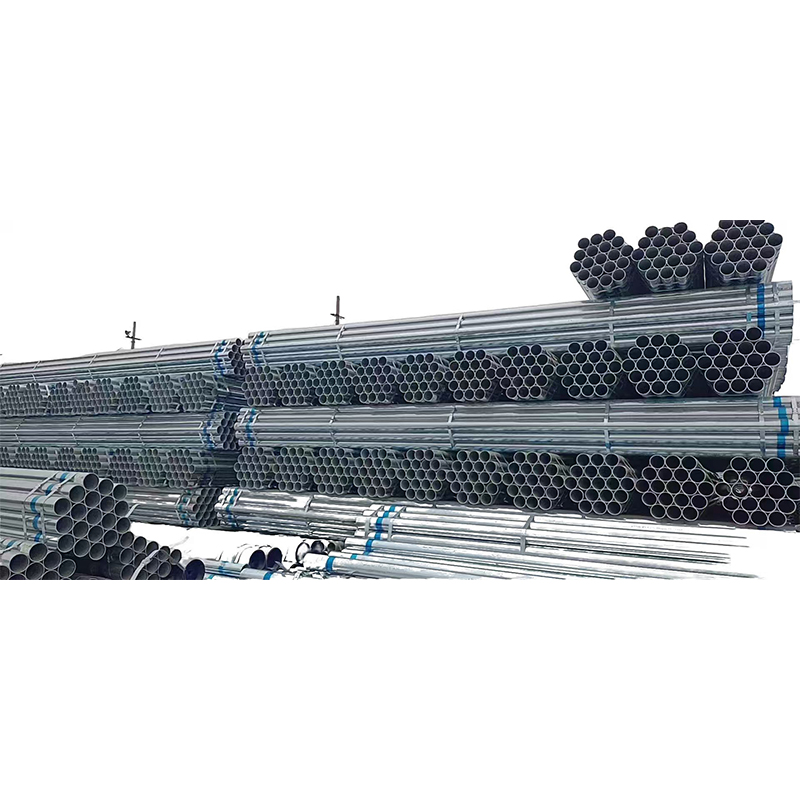
Galvanized Seamless Steel Pipe: Based on seamless steel pipe, hot-dip galvanizing/electro-galvanizing treatment is added (zinc layer thickness ≥85μm), improving corrosion resistance by 3-5 times. Suitable for outdoor and humid environments (such as fire-fighting pipelines, outdoor water supply pipes), conforming to GB/T 3091 standard, with a diameter range of DN15-DN200 and working pressure ≤2.5MPa.
Ordinary Seamless Steel Pipe: Without anti-corrosion coating, suitable for dry, non-corrosive medium- and high-pressure applications (such as industrial hydraulic pipelines, steam pipelines), with a diameter... DN6-DN630, wall thickness 2-60mm, tensile strength ≥410MPa.
Core advantages: No weld defects, high pressure resistance, impact resistant, suitable for high-pressure fluids (such as oil, gas, steam);
Compatible accessories: Commonly used with female threaded couplings and high-pressure valves; the threads need to be sealed with PTFE tape.
2. Welded Steel Pipe
Core Technology: Using steel plates/strips as raw materials, the pipes are rolled and then welded together. Subdivided by welding method and forming process, it is less expensive than seamless steel pipes and suitable for large-diameter applications.
Key Subtypes:
Double-Sided Submerged Arc Welded Spiral Pipe: Steel plate spirally rolled + double-sided submerged arc welding on both inner and outer walls (continuous weld, strong crack resistance), diameter range DN200-DN3200 (significant advantages for large diameters), wall thickness 3.5-25.5mm, conforming to GB/T 9711, SY/T 5037 standards, suitable for long-distance water and oil/gas transportation (such as municipal trunk pipelines), working pressure ≤4.0MPa;
Straight Welded Steel Pipe: Steel plate straight rolled and formed + straight seam welding (high-frequency welding/submerged arc welding), diameter... DN15-DN1600, wall thickness 1.2-12mm, suitable for low-pressure scenarios (such as indoor water supply and drainage, gas branch pipes), conforming to GB/T 3091 standard; Galvanized welded steel pipe: galvanized treatment on the basis of straight seam welded pipe, suitable for low-pressure corrosion protection scenarios (such as civil gas pipelines, indoor fire branch pipes), diameter DN15-DN100.
Core advantages: Flexible large-diameter production, low cost, suitable for long-distance, high-flow transportation;
Matching accessories: Spiral steel pipes are often connected with flanges and ductile iron pipe fittings, while straight seam welded pipes are often matched with steel pipe fittings.
III. Core Performance Indicators and Quality Standards
1. Key Performance Indicators
Pressure Bearing: Seamless steel pipe ≥2.5MPa (high pressure), spiral welded pipe ≤4.0MPa (medium-high pressure), straight seam welded pipe ≤1.6MPa (low pressure);
Corrosion Resistance: Galvanized steel pipe zinc coating adhesion ≥60N/cm, stainless steel pipe salt spray test ≥500 hours without rust;
Mechanical Properties: Carbon steel pipe tensile strength ≥375MPa, elongation ≥20%; Stainless steel pipe tensile strength ≥520MPa, elongation ≥40%;
Sealing: Welded steel pipe welds require 100% ultrasonic testing + hydrostatic testing (pressure 1.5 times the working pressure, pressure held for 30 minutes without leakage).
2. Core Implementation Standards
International Standards: ISO 3183 (Steel pipes for oil and gas transmission), ISO 2531 (Steel pipes for water supply and drainage);
Domestic Standards: GB/T 8162 (Seamless steel pipes for structural purposes), GB/T 3091 (Welded steel pipes for low-pressure fluid transmission), GB/T 9711 (Steel pipes for oil and gas industry transmission), SY/T 5037 (Spiral submerged arc welded steel pipes for low-pressure fluid transmission).

FAQ

What is the technical difference between "black" and "galvanized" fittings?
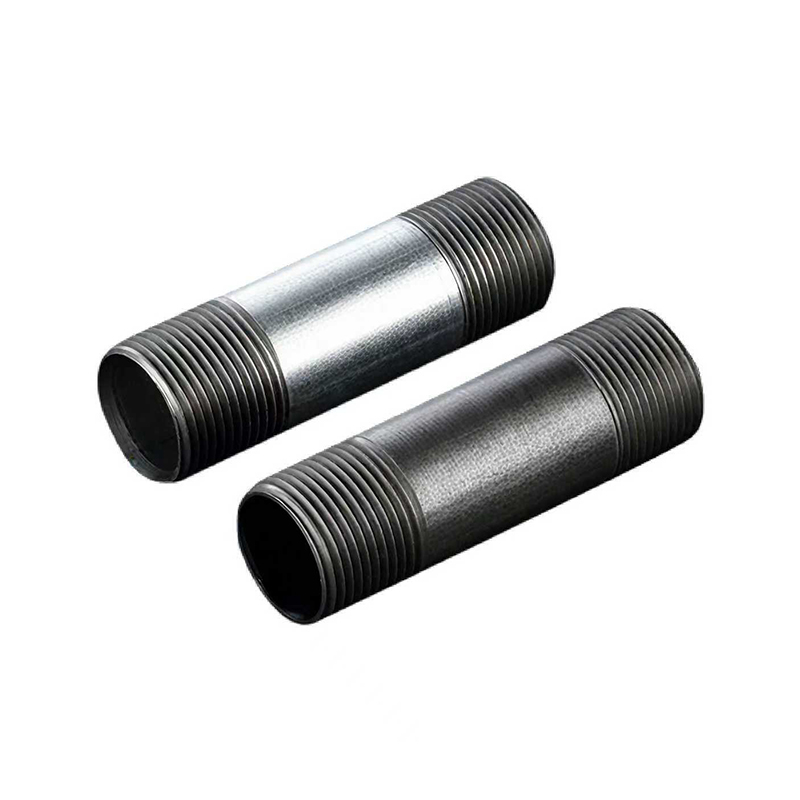
The difference lies in the surface treatment and intended use. Black fittings are coated with a proprietary anti-rust oil. They are primarily used in natural gas pipelines, steam systems, and oil transportation, where the presence of zinc (present in the galvanized coating) can peel off and clog sensitive valves or burners. Galvanized fittings, on the other hand, are hot-dipped in a zinc bath, providing high corrosion resistance for drinking water systems and outdoor environments. From a metallurgical perspective, the iron body is the same; only the protective barriers differ to accommodate chemical compatibility.
What do "UL Listed" and "FM Approved" actually mean for a project?
These certifications are independent safety verifications. UL (Underwriters Laboratories) focuses on the structural integrity and burst pressure of fittings. FM (Factories Mutual) focuses on preventing property damage, ensuring fittings can withstand fire and mechanical impact. For contractors, using UL/FM certified fittings means installations will pass fire chief inspections, and building owners can obtain lower insurance premiums because the risk of catastrophic pipe failure is minimized.
What if the fitting surface discolors?
For black fittings, the surface is coated with anti-rust oil. Some surface oxidation (orange tinge) may occur if stored in a high-humidity environment for an extended period. This is usually superficial and does not affect the structural integrity of "heavy-duty" walls. However, for critical applications, fittings should be wiped clean and re-oiled, or stored in their original double-walled prefabricated packaging until installation.